
It is 11 pm.
You have finished your last session. You have written your notes. You have done the quiet, careful work that nobody sees — the work that actually changes people’s lives.
And then you open your website and stare at it.
Three visitors this week. Two were probably you.
If that sentence landed somewhere uncomfortable, you are in exactly the right place.
The uncomfortable truth about why excellent therapists stay unfound
The standard advice you will hear is: post more on Instagram. Try Google Ads. Work on your personal brand.
None of that is the real problem.
The real problem is this: most faith-based therapists have a website that describes what they do — instead of a content system built around what their ideal clients are searching for.
There is a significant difference between the two.
That difference is why a Christian trauma therapist with 15 years of clinical experience can remain on page 4 of Google while a life coach who completed a weekend certification last year appears on page 1.
The life coach is not better.
They simply have a better content strategy.

How Google actually decides who gets found
There is a lot of mythology around SEO that keeps therapists either paralysed or wasting money on things that do not work.
So here is the truth, plainly:
Google’s only job is to match a search query with the most relevant, trustworthy, helpful content available. That is genuinely all it is doing.
When someone in Nairobi types “Christian counselor for anxiety near me,” Google scans every website it has indexed to find the one that most clearly and specifically answers that person’s need.
If your website says “I offer counseling services in a safe and supportive environment,” which is what approximately 80% of therapy websites say, Google has no way of knowing whether you are the right answer.
It defaults to the websites that have specifically and repeatedly demonstrated expertise around those exact terms.
According to Search Engine Land, over 68% of all online experiences begin with a search engine — and the vast majority of clicks go to the first page of results.
If you are not there, you are invisible to the people actively looking for you.
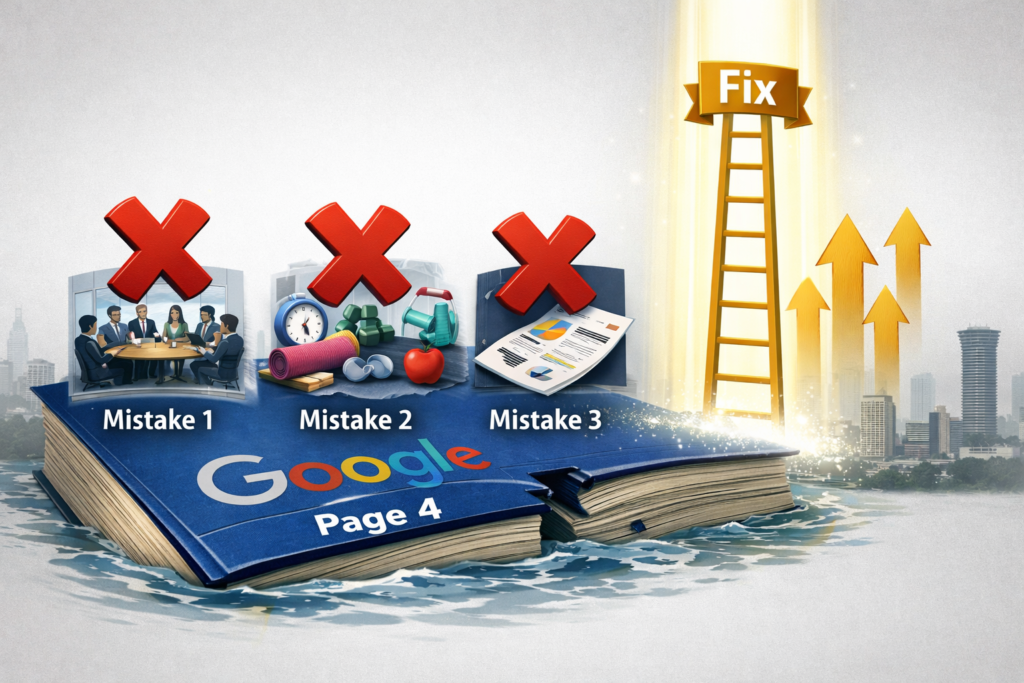
The three specific mistakes keeping you on page four
Mistake one: Writing for colleagues, not clients
Read your About page right now.
Does it mention your qualifications? Your theoretical orientation? Your years of clinical experience?
All of that is important. But it is written for other therapists and licensing boards — not for someone at 11pm who is finally admitting they need help.
That person is not searching for “person-centred integrative therapist.”
They are searching for “someone who understands what it is like to be a Christian struggling with depression and feel like your faith should be enough.”
They want to feel recognised before they feel assessed.

Mistake two: Broad topics instead of specific searches
Writing a blog post called “The Importance of Self-Care” will not bring you new clients.
Not because it is bad advice. But because 4.7 million pieces of content already exist on that topic, and Google has no reason to rank yours.
Writing a post called “Why Christian Women in Kenya Struggle to Prioritise Rest — And What Scripture Actually Says About It” is completely different.
That is specific. That is searchable. That demonstrates you understand your audience’s actual cultural and spiritual context.
These longer, more specific search phrases — what SEO experts call long-tail keywords — have lower search volume but dramatically higher conversion rates. The person searching already knows exactly what they want.
For a faith-based therapist, long-tail keywords are not a compromise.
They are your superpower.
Mistake three: Treating your website as a brochure
A brochure is static. It describes what you offer and waits for people to find it.
A content engine publishes consistently, builds authority over time, and creates dozens of entry points through which your ideal clients can discover you.
The difference between a therapist with three website visitors a week and one with three hundred is almost never the quality of their clinical work.
It is almost always whether or not they have been publishing genuinely helpful, specifically targeted content for the past year.
Google rewards consistency and depth. A website with twenty well-written, specific blog posts will outrank a beautifully designed website with nothing to say — every time.
What the fix actually looks like
The good news: this is not complicated.
It requires clarity and consistency — not technical expertise or a large budget.
Start with your ideal client’s exact search language.
Think about the three people you most love working with. What were they searching for when they found you? Write those phrases down. Those are your starting keywords.
Build one cornerstone page per service.
A single, detailed page (800-1,500 words) that clearly explains what you offer, who it is for, what the experience is like, and what makes your approach distinct. Findable for searches like “Christian trauma therapist Nairobi” or “faith-based marriage counselor Kenya.”
Publish at least 1 targeted blog post per month.
Each post answers a specific question your ideal clients are asking. Not a teaser. Real information they can use. The trust that is created is more valuable than any consultation you might have booked if you had hidden the answer behind a paywall.
Link everything together.
Every blog post links to at least one service page. Every service page links to relevant blog posts. This internal linking structure tells Google your website is a coherent, authoritative resource — not a collection of disconnected pages.
Be patient. Be consistent.
SEO for a new website typically takes three to six months to show meaningful results. The therapists who quit at week six are the ones who never experience what month eight looks like.
Waking up to enquiries from people who found you through Google. Who read three of your posts before reaching out? Who already trust you before you have spoken a single word.
That is what you are building.

A note on doing this with integrity
People searching for a Christian counsellor or faith-based therapist are often in genuine pain.
They deserve content that genuinely serves them— not content designed to manipulate them into booking a session.
The most effective content strategy and the most ethical content strategy are, in this case, exactly the same thing: write content that genuinely helps people. Offer it generously. Build trust before you ask for anything.
That is not naivety. It is simply how trust works.
And in therapeutic and ministry contexts, trust is everything.
You have done the harder work already
You spent years becoming excellent at something that changes lives.
Being found is the next chapter — and it is far more achievable than it might feel at 11pm staring at that analytics page.
If you want to explore what a content strategy built around your specific practice would look like, the Clarity Call is a good place to start.
No pitch. No pressure. Just an honest conversation about where you are and what would actually help.

One response to “Why Faith-Based Therapists Stay Invisible Online (And the Exact Fix)”
Hi, this is a comment.
To get started with moderating, editing, and deleting comments, please visit the Comments screen in the dashboard.
Commenter avatars come from Gravatar.